
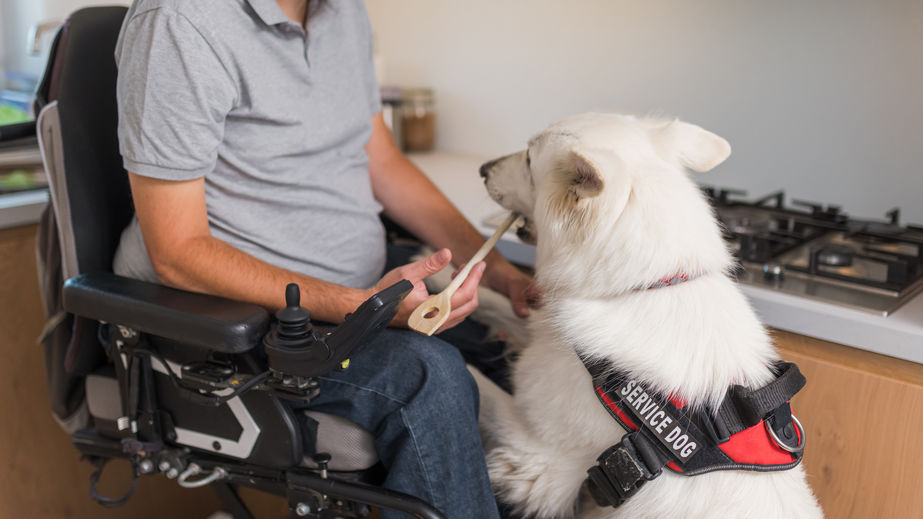
At Fetch and More, a question we often get is: “How do I know if a service dog is the right choice—and how do I choose the right one?”
The truth is, there isn’t a single factor or formula that guarantees success. Choosing a service dog is about understanding real needs, realistic expectations, and what a long-term partnership will actually look like.
Below, we’ll go over some key questions to consider when starting your service dog journey, to help you evaluate options with confidence.
What Tasks Does My Service Dog Need to Be Able to Perform?
Service dogs are trained to perform tangible, disability-mitigating tasks, using an understanding of patterns, cues, and context to respond reliably and effectively in real-world situations.
While those tasks depend entirely on individual needs, some examples include:
- Interrupting panic attacks or dissociative episodes
- Performing deep pressure therapy to help regulate the nervous system
- Alerting to seizures, blood sugar changes, or other medical events
- Guiding, retrieving items, opening doors, or providing mobility support
- Creating space in crowds or leading someone to safety
These tasks require precise and consistent training, which is where customized service dog training programs become essential. Professional oversight and structured guidance ensure reliable task performance in everyday situations.
What Factors Should I Consider When Choosing a Service Dog?
The most important factor when choosing a service dog is the connection and bond between the dog and handler. Trust, responsiveness, and willingness to work together directly impact task reliability and long-term success. In addition to connection, other key factors include:
- Size: Service dogs can come in many shapes and sizes—all that matters is that the dog can reliably perform tasks. A larger dog is typically necessary for mobility support, balance assistance, or bracing. Smaller dogs may excel at medical alert or psychiatric tasks but may not be appropriate for physical support.
- Task Requirements: The type and complexity of tasks needed should guide dog selection. Medical alert, psychiatric support, mobility assistance, and public access all place different demands on a dog.
- Lifestyle: Energy level, living environment, travel needs, and daily routine all influence whether a dog will thrive in a working role.
- Trainability: Nearly every single dog can be trained—but only some dogs can handle the amount of training required for certain tasks. Dogs with the ability to work through challenges are better suited for advanced task work.
- Environment Sensitivity: A successful service dog must be comfortable in varied environments, including crowds, public transportation, medical settings, and unfamiliar spaces.
Again, everyone—and every dog—is different, so certain factors may be more or less relevant to each specific situation. However, with these main factors in mind, it becomes easier to identify what kind of service dog will truly fit long-term.
How do I Pick the Right Service Dog Training Program?
Training timelines vary depending on the tasks, the dog’s temperament, and the consistency of training. Programs that account for this variability help set realistic expectations and reduce unnecessary pressure on both you and your dog.
It’s also important to choose a program that equips you with the knowledge, tools, and support system to confidently work with your dog. Clear communication, realistic timelines, and continued support are key indicators of a program designed for long-term success—especially for complex or evolving needs.
Above all else, you’ll want to choose a program that aligns with your lifestyle. Service dogs are not one-size-fits-all, and neither is effective training. Programs that adapt to specific disabilities, task requirements, environments, and learning styles tend to produce more reliable results than rigid, standardized approaches.
Accessibility and consistency matter. Training should fit into your day-to-day responsibilities and real-life demands—whether that’s balancing work, school, caregiving responsibilities, military life, recovery, or managing chronic illness and flare-ups.
That’s why, at Fetch and More, our training programs are 100% virtual, flexible, and accessible. We believe that training should adapt to real circumstances—not the other way around. We understand that energy, time, and capacity aren’t unlimited, and effective training respects that reality while still providing structure, accountability, and meaningful progress.
What’s the Next Step in Choosing a Service Dog?
Choosing a service dog is a major decision, and it’s normal to have questions along the way. Having access to the right support can make those next steps feel clearer and more manageable.
At Fetch and More, we pride ourselves on supporting and empowering our clients as they move through life. Our virtual service dog training program offers accessible, personalized training designed to support you every step of the way. Additionally, our head trainer, John Bellocchio, is well-versed in the Americans with Disabilities Act and experienced in Alternative Dispute Resolution, allowing us to support you not only in training but also in protecting and reinforcing rights through research, advocacy, and mediation when needed.
Getting started is simple—and whether you want to enroll in one of our training programs, learn more about our other virtual training programs, or just want to learn a bit more about the whole process, we’re here to help.
If you have any questions at all, please don’t hesitate to fill out a contact form, email us, or call us at 201-914-8268.
Frequently Asked Questions About Service Dogs
Below are some frequently asked questions we get about service dogs. For a deeper dive into related topics, visit our blog for additional guidance and resources.
How do I know what tasks I need a service dog to do?
Related reading: What Can Emotional Service Dogs Help With?
Start by identifying the hardest parts of daily life that relate to your disability (safety, mobility, medical events, emotional regulation, etc.). Then map those challenges to specific, trainable tasks. A professional can help translate needs into realistic, reliable task training.
Note: Though the terms often get used interchangeably, it’s important to remember that service dogs are not the same thing as emotional support dogs.
Does my service dog need to wear a vest?
Related reading: Common Misconceptions About Psychiatric Service Dogs
In the U.S., the ADA does not require service dogs to wear a vest. Vests can be helpful for visibility and reducing public interruptions, but they’re not legally required. What matters is that the dog is trained to perform disability-related tasks and can behave appropriately in public.
Can my service dog go everywhere with me?
Related reading: What Legally Qualifies as a Service Dog?
In general, service dogs are allowed in most public places under the ADA. However, access can be limited based on your dog’s behavior. Additionally, certain sterile environments may have additional restrictions.
What if someone challenges my service dog in public?
Related reading: Navigating Questions and Comments About Your Emotional Service Dog
Under the ADA, staff may ask:
- Is the dog required because of a disability?
- What work or task has the dog been trained to perform?
They cannot ask for medical documentation, demand certification, or require the dog to demonstrate the task.
Remain calm, and provide only the information the law requires—for example, “Yes, this is a service dog required because of a disability, and the dog is trained to perform medical alert tasks.”